Protest in Jaffna Calls on Anura Government to Withdraw New Anti-Terrorism Bill
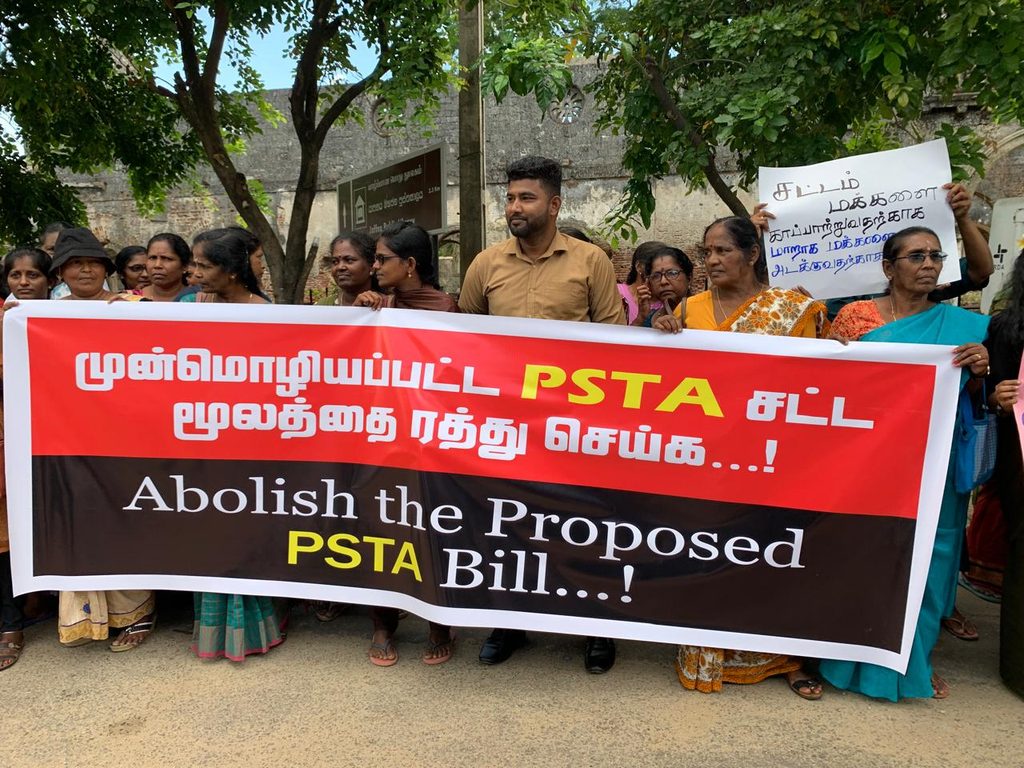
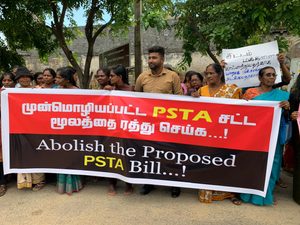
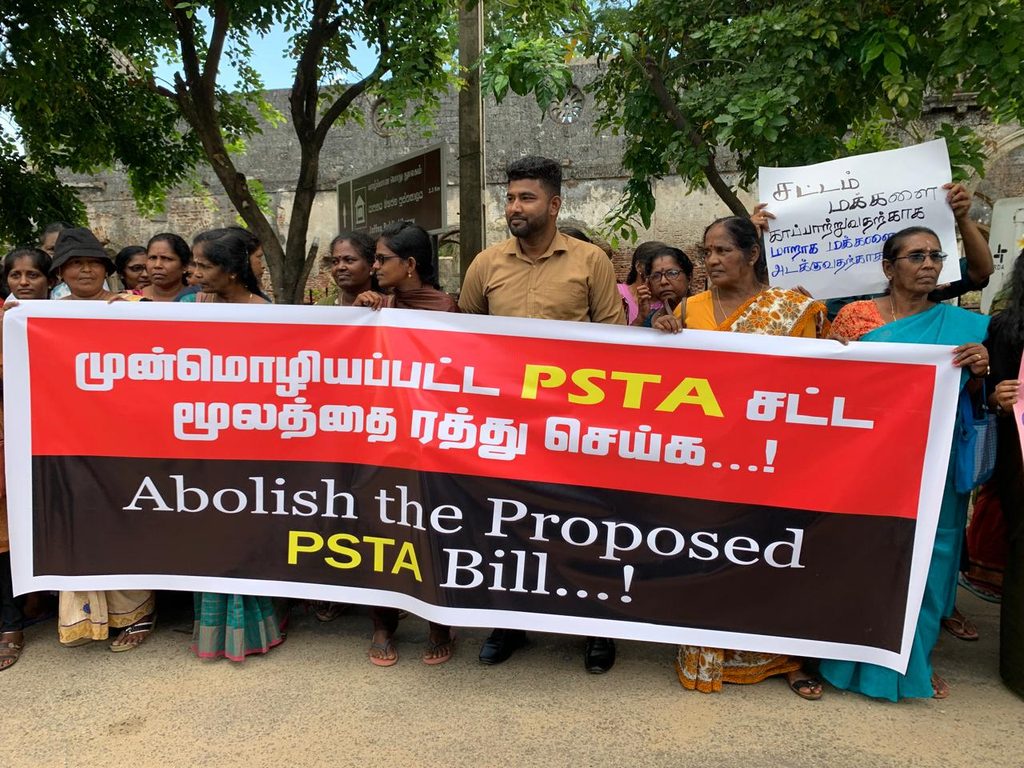
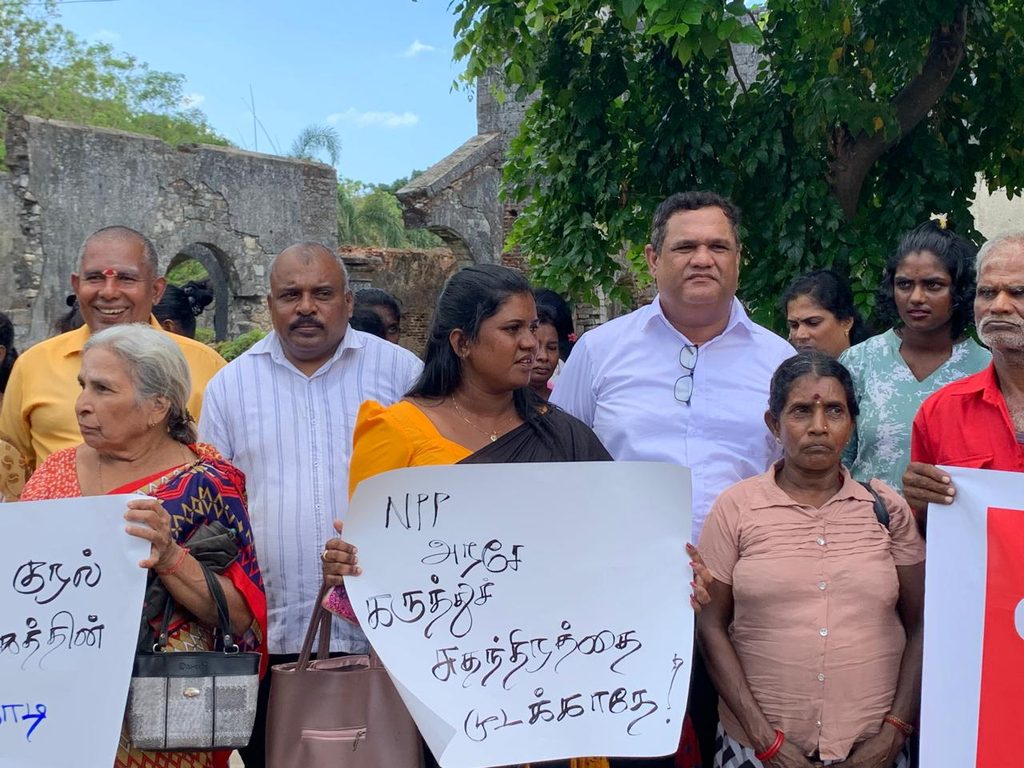
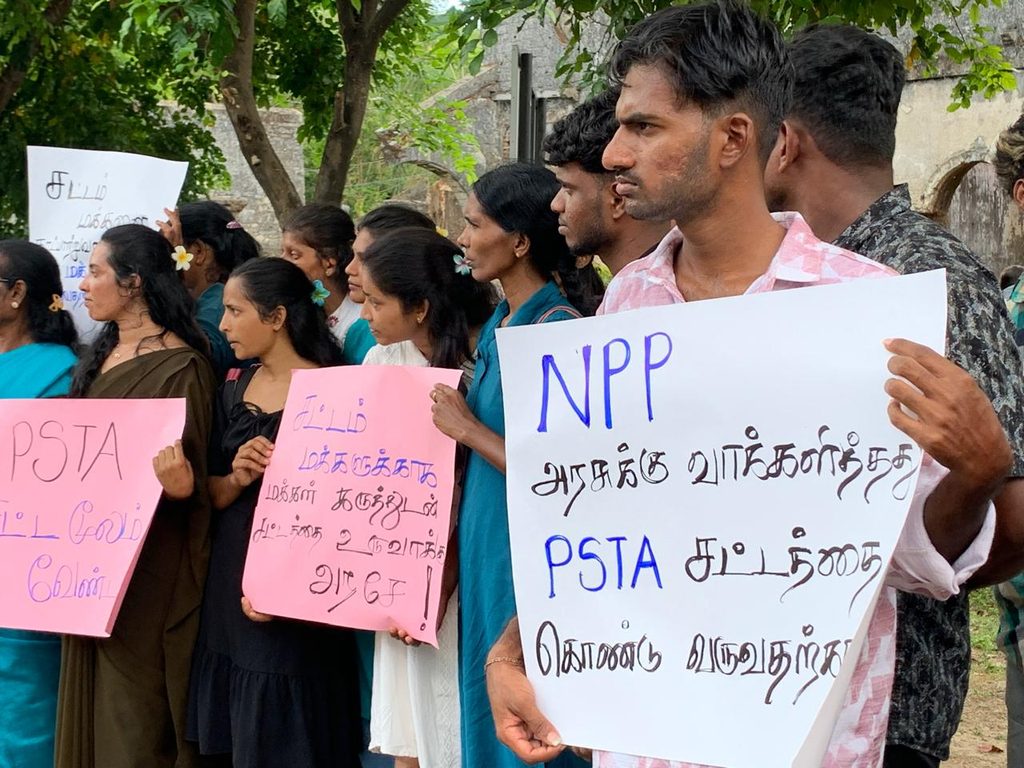
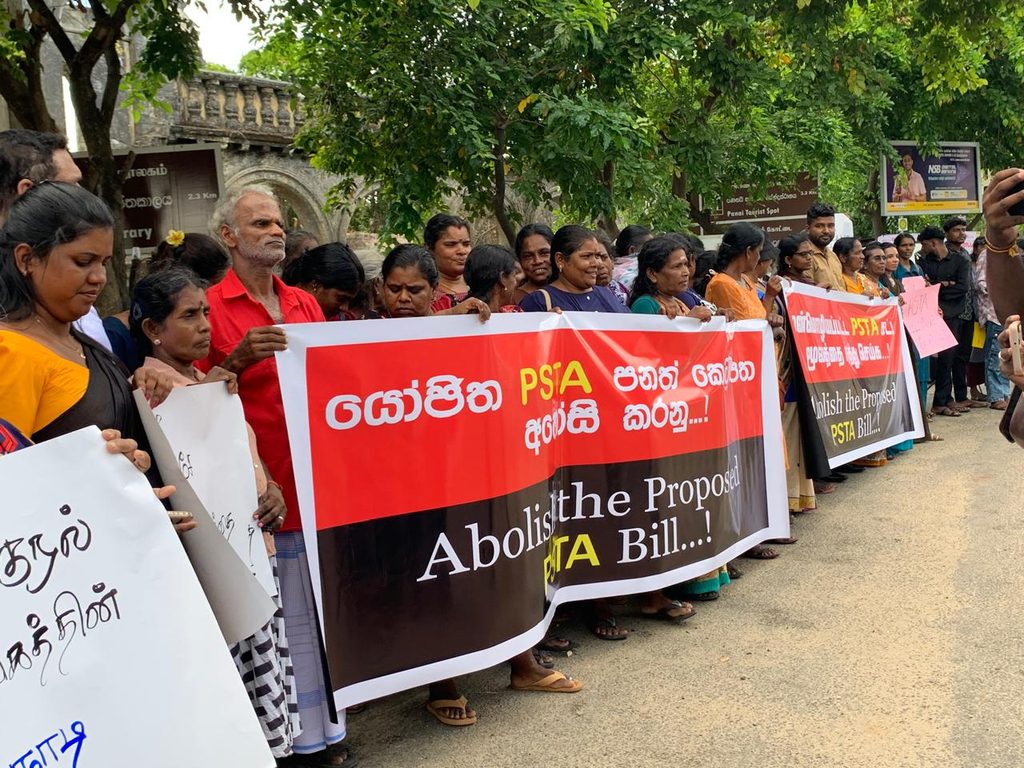
A protest was held in front of the Northern Province Governor’s Secretariat in Jaffna, demanding that the government led by President Anura Kumara Dissanayake withdraw the proposed new anti-terrorism legislation, titled the Protection of the State from Terrorism Bill.
The protest was organised by the North-East Civil Coordination Committee, with participants calling on the government to abandon both the proposed legislation and the existing Prevention of Terrorism Act (PTA).
Carrying placards with slogans such as “Anura Government, We Do Not Want a New Terrorism Law or the Old Terrorism Law,” protesters warned that the proposed legislation could pave the way for authoritarian rule, expand military powers and suppress human rights activists, journalists and those campaigning for justice.
The demonstration brought together people from the eight districts of Sri Lanka’s Northern and Eastern provinces, including war-affected communities and individuals who say they have suffered under the existing anti-terrorism framework.
Concerns Over Expanded Powers
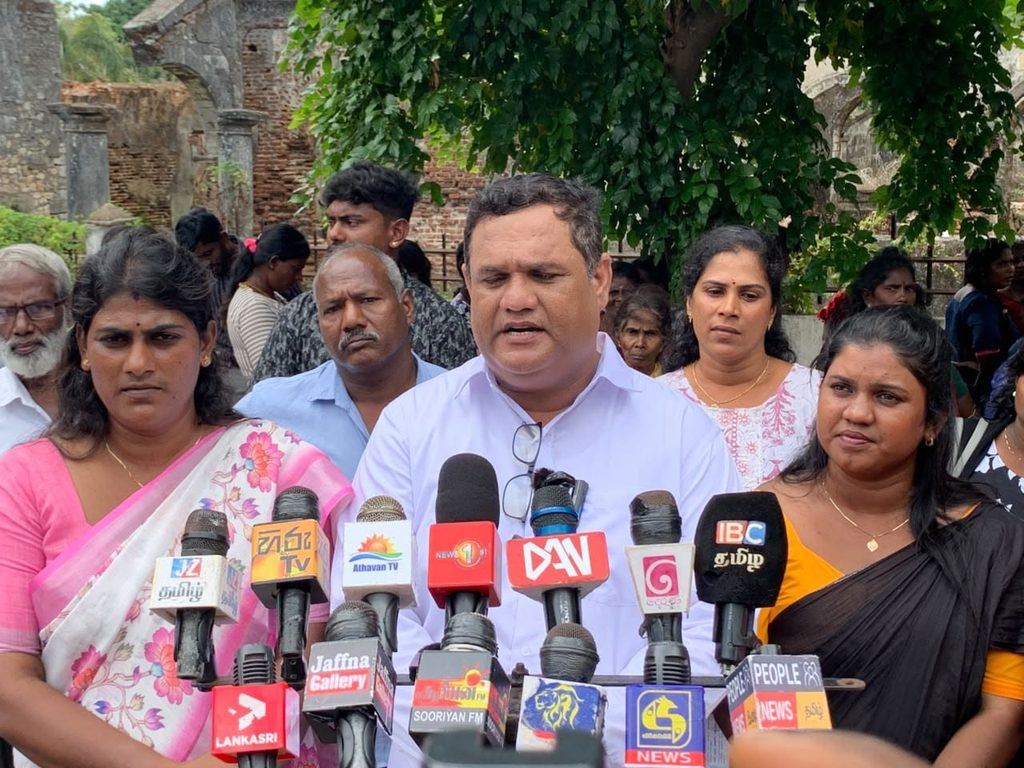
At the conclusion of the protest, a petition addressed to the United Nations and the European Union was read out, urging the international community to call for the withdrawal of the proposed legislation.
The petition raised concerns over several provisions of the bill, which protesters argued could undermine fundamental rights and democratic freedoms.
According to the petition, Section 19 would grant the military and Coast Guard powers to arrest suspects similar to those exercised by the police.
Section 20, they claimed, would authorise the police, military and Coast Guard to search homes, stop and search individuals in public places, conduct investigations and make arrests without a warrant.
Protesters also expressed concern over Section 27, which they said would permit suspects to be detained for up to two years for investigation.
Under Section 38, the petition alleged, police officers would be authorised, with a magistrate’s permission, to question detainees at their place of detention or transfer them elsewhere for questioning.
Concerns were also raised over Section 51, which the protesters said could allow authorities, with judicial approval, to restrict public gatherings, meetings and processions if a police officer believed a terrorist offence was likely to occur.
Fears Over Democratic Freedoms
The petition argued that the proposed legislation could restrict freedom of assembly, freedom of expression and freedom of the press by granting broad powers to law enforcement and security personnel.
Protesters questioned what safeguards would prevent torture, abductions, enforced disappearances and extrajudicial killings if individuals could be detained and questioned without immediate access to judicial oversight.
They said communities in the North and East had endured arrests, prolonged detention, torture and sexual violence under the existing Prevention of Terrorism Act and feared that similar abuses could continue under the proposed legislation.
The petition also highlighted concerns that activists continue to face questioning by the Terrorism Investigation Division and visits from intelligence officers when organising public gatherings or engaging in community activities.
Appeal to the Government and International Community
The protesters called on President Anura Kumara Dissanayake’s government to withdraw the proposed bill, warning that legislation introduced in the name of national security must not be used to suppress dissent or undermine democratic rights.
They urged the United Nations and the European Union to take note of their concerns and support efforts to prevent the introduction of legislation that, in their view, could threaten civil liberties and the safety of vulnerable communities.
The protest concluded with a renewed demand for the government to abandon the proposed bill and ensure that any legislation addressing terrorism complies with human rights standards and democratic principles.
The concerns and interpretations of the bill’s provisions outlined above reflect the claims made by the protesters and their petition.
About The Author