Filmmaker Asoka Handagama Defends Maitreyi’s Identity: “That’s Her Right”

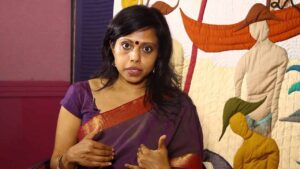
COLOMBO: Award-winning Sri Lankan filmmaker Asoka Handagama has spoken out in support of Canadian actress Maitreyi Ramakrishnan amid a growing social-media controversy surrounding her description of her national identity as “Tamil Eelam.”
In a Facebook post published after watching Netflix’s newly released film Best of the Best, Handagama praised the performances of the young cast, particularly Ramakrishnan, who plays one of the film’s two central characters, Maya. The film was released on Netflix on September 18, 2026, and follows two friends navigating university life and competitive Bollywood-fusion dance.
Handagama described Maitreyi Ramakrishnan as a “very charming and adorable young actress” and questioned why her personal understanding of identity should become a source of anger or controversy.
“That’s her right. So why should it bother us?” he wrote.
His comments come amid criticism from sections of Sri Lankan social media users who have reacted strongly to Maitreyi Ramakrishnan’s reference to “Tamil Eelam” when discussing her identity.
Maitreyi Ramakrishnan was born in Canada to Sri Lankan Tamil parents who migrated to Canada during the period of war in Sri Lanka. She is a Canadian citizen and has publicly spoken about her Tamil heritage and diaspora background.
Handagama’s argument goes beyond Ramakrishnan herself. He points to a broader question faced by millions of people whose parents or grandparents migrated because of war, political instability or other circumstances: Where does a person belong, to the country where they were born and live, to their parents’ homeland, or to both?
The filmmaker noted that identity can become particularly complicated for people from migrant communities and argued that an individual’s understanding of their own identity does not necessarily have to correspond neatly with their legal nationality.
His intervention is also significant given Handagama’s own artistic history.
For decades, Asoka Handagama has used theatre, television and cinema to explore some of Sri Lanka’s most difficult social and political questions, including ethnicity, war, gender, inequality and the consequences of social divisions.
His early theatre work emerged against the backdrop of Sri Lanka’s growing ethnic crisis. His later films, including Me Mage Sandai (This Is My Moon), Thani Thatuwen Piyambanna (Flying with One Wing) and Ini Avan (Him, Here, After), dealt with subjects connected to war, social divisions, gender and the aftermath of violence. His work has received recognition at international film festivals, including awards at the Tokyo International Film Festival and San Sebastián.
Me Mage Sandai, in particular, examined the impact of Sri Lanka’s civil war on ordinary people and received international recognition for its treatment of the country’s social and political divisions.
That history gives added context to Handagama’s latest comments. Rather than treating Maitreyi Ramakrishnan’s identity as a political declaration that must be accepted or rejected by others, he approaches it as a personal question shaped by family history, migration and memory.
“Her parents left Sri Lanka because they could not live there, and she grew up hearing stories about the country and her family’s past,” Handagama wrote, suggesting that these experiences may have contributed to her own understanding of identity.
He also rejected the idea that Maitreyi Ramakrishnan’s identity should diminish the artistic value of her work.
“If I ever had the chance, I’d cast her in one of my films. She’s a very talented actress,” he said.
The controversy surrounding Maitreyi Ramakrishnan has therefore opened a much larger conversation, not simply about one actress or one phrase, but about diaspora identity, memory, nationality and the continuing legacy of Sri Lanka’s ethnic conflict.
For a country that experienced decades of war and displacement, questions about how the children of migrants understand their roots are unlikely to disappear simply because their legal nationality is clear.
Handagama’s message is ultimately a call to separate two things that are often conflated: a person’s legal nationality and their personal sense of identity.
The former can be documented through citizenship and official records. The latter is shaped by family, history, culture, memory and individual experience.
And, as Handagama asks: why should another person’s answer to that deeply personal question bother us?
Asoka Handagama’s FB Post : Click Here

About The Author